
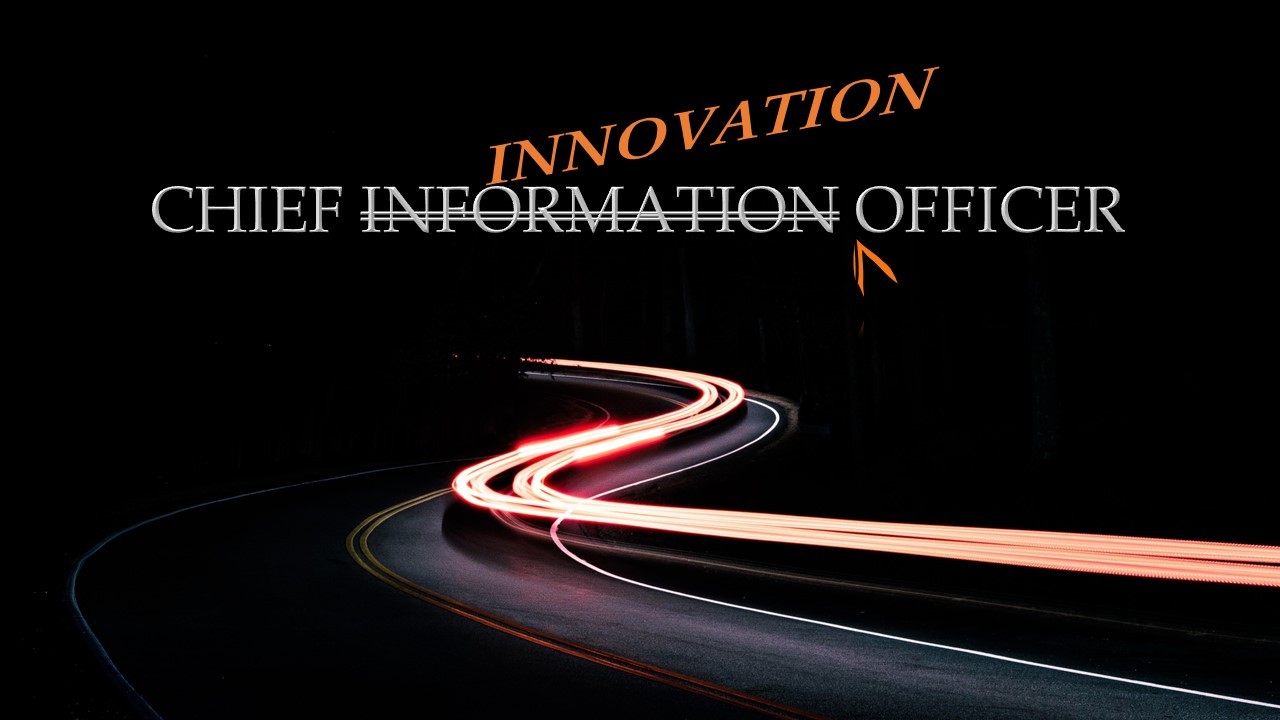
The successful Chief Information Officer (CIO) of today oversees the leverage of technology to enable new business models and not just manage tech intricacies. Emergence of Cloud, SaaS and Data led to digital transformation of businesses, putting the CIO in the driver’s seat for initiatives enabling asymmetric advantage. Research from a leading firm did point out that CIO time on traditional IT Oversight had dropped to below 50% in 2020 vis a vis above 80% in 2010 thus signifying a shift towards more strategic, business-oriented endeavors.
However, would further evolution of Cloud/SaaS, Near-human AI, and Citizen developer tools not change the technology responsibilities within the C-Suite? Research predicts that over three-fourth of enterprises will leverage AI to automate tasks and augment human capabilities over the next couple of years. Wouldn’t a business leader, leverage AI to augment technology acumen, and to choose the right solutions? The natural progression of business leaders making technology decisions is for the role of CIO to fade away.
What about Cybersecurity, you may ask? And sure, as sophisticated threats fuel exponential increase in cybersecurity, it will remain a leadership priority. But if restricted merely to mitigating risks and ensuring robust defence mechanisms, how different would the role be from the IT & Infrastructure oversight of yore? Back to being the backstage wizard of an organization, quietly managing network firewalls and end user devices as they did with databases and tech infrastructure.
Evolving to Stay Relevant: From Information to Innovation
So how do CIO evolve to be part of the leadership team that forges a resilient and pioneering enterprise in the coming decade? How do they become the linchpin of organization growth? That question becomes rhetorical as one acknowledges that organizations have no choice but to focus on innovation to sustain profitable growth in today’s unpredictable, paradoxical, and tangled world.
According to one survey, over 70% of executives agree that innovation is critical to the success of their companies but approximately 20% believe they are excellent at building a culture of innovation. In this context, it is interesting to note that research puts merely 30% of CIOs as being actively engaged in innovation initiatives. Thirty percent participate! No doubt, those leading are even lesser.
It is for the CIO to evolve their focus from Information to Innovation, to stay a relevant member of the C-Suite.
The Mindset Shift: Beyond Bits and Bytes
A successful Chief Innovation Officer (let us call them CInO) has a mindset that values experimentation and risk-taking. The ability to encourage calculated risk within a structured framework is fundamental to fostering innovation. This is a significant contrast to the CIO mindset of driving certainty.
Secondly, innovation often emerges at the intersection of diverse ideas and perspectives. CInO thus need to be willing to encourage cross-domain diversity of perspectives while facilitating seamless convergence that enables solving complex perspectives. A switch from the analytical left-brain approach to right-brain intuitive creativity is in order.
Finally, where not already present, there may be a change needed from technology centricity to customer centricity. Prioritizing attention to customer experiences & hassles and being on the lookout for the underserved market is essential. Curiosity, and a relentless drive to explore the uncharted would be the hallmark of such a mindset.
Rethinking Capabilities: Repurposing Competencies
Agility is the bedrock of innovation, and as technology has evolved rapidly, Agility is the one skill that CIOs have demonstrated in abundance. It may however need a slight adjustment to adapt the discovery driven mindset to business innovation.
Innovation requires accepting change. CIOs are no strangers to Change Management. A CInO would build on this skill to evolve from ‘managing’ change to ‘catalyzing’ it. They would be the torchbearers for a culture encouraging collaborative experimentation and critically, tolerating failure.
There may be a need to developing a keen eye for market insights, if not already present. Any fostering of cross-pollination of ideas would align innovation efforts with business objectives only when anchored in a market imperative.
Business domain expertise is sometimes an overlooked skill. CIOs who have grown through the ranks no doubt understand the business completely. Yet others may however depend on the business analysts within their organization to offer this as a complement to their technology expertise. A CInO, who does not build their domain expertise may end up being mere innovation facilitators. It is the domain expertise that would make them the visionary leaders in the C-Suite.
Bold Choices: Navigating the Future
In a world where change is constant, the question remains: Will CIOs lead the charge in redefining their roles as innovation pioneers or become outdated relics of a bygone era? How will they mould themselves into a CInO as innovation transcends technology?
The choice defines not only their future but that of the organizations they serve.
Image Credit: Base Picture by Osman Rana. http://tinyurl.com/OsmanRana-Unsplash
