

Changing customer expectations is one factor that has driven enterprises to transform or perish. Fast food chains have learned this difficult way. McDonald’s, Pizza Hut, and Subway all had moments when their legacy menus could not keep up with changing appetites. Agile adaptation to customer requests is not a requirement limited to the fast-food industry; it is becoming a baseline requirement for every industry. Nor is it limited to product transformation; it is seen to influence customer experience, business models, and sustainability transformations.
Customer experience and business model transformation must also be considered in the context that industry boundaries no longer hold. Telecom enterprises offer banking services. Retailers now stream media and entertainment content. Tech platforms are moving towards health and education. Reliance Jio has been trying this in India. What began as a telecom venture quickly evolved into a digital service network that includes shopping, financial services, and entertainment.
In addition to customers, regulatory and societal forces push enterprises to initiate transformations. The Pharmaceutical, Healthcare, and Financial Industries have seen considerable transformation stemming from consumer protection laws. The manufacturing industry has had to transform to comply with sourcing laws and environmental considerations. Consumer Products & Retail industries can no longer exploit sweatshops in other countries due to evolving labor regulations.
Sustainability, whether driven by regulators or otherwise, is becoming a core aspect of how businesses transform themselves to prepare for the future. There is a growing pressure to focus less on quick wins and more on long-term viability. Fossil fuel giants are no longer awaiting government guidelines; they are now diversifying into renewables.
However, not all drivers are external drivers. Within the organization, the supply chain and operations are transforming for greater productivity, quality, and speed to market. Cheaper and better sources for both raw materials and finished goods, combined with streamlined and automated shop floors, have been a constant focus. 3D printing can and will likely disrupt current manufacturing paradigms.
From a people perspective, job descriptions are evolving mid-project, and skills are expiring faster. Automation and AI are changing the profile of work done. Equally, workplace transformation forms the backbone of improved operations and people management.
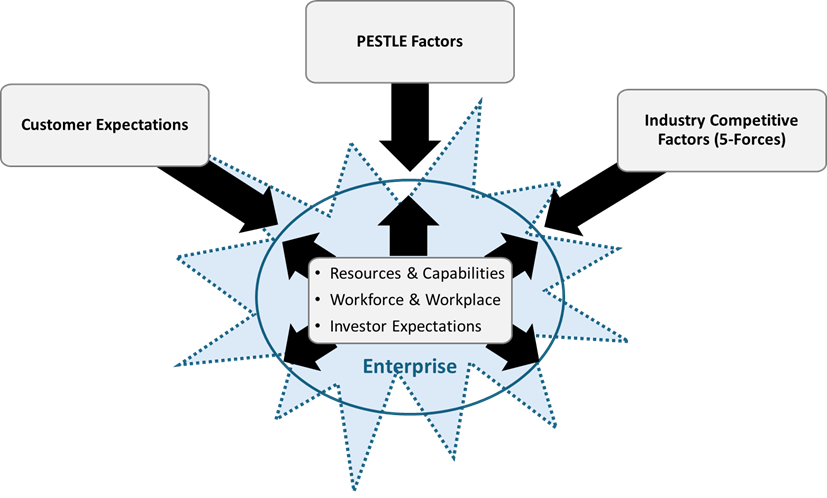
Figure 1 Internal & External Forces that Reshape the Enterprise
The Figure conceptually captures these and other factors that cause enterprises to transform. These include
- The external impetus is customer expectation, PESTLE (Political, Economic, Social, Technological, Legal and Environmental) factors and the Competitive forces (Buyer Power, Supplier Power, Threat of Rivals, new entrants & substitutes)
- The internal impetus is the resources & capabilities, workforce & workplace and the investor expectations
How well does your strategic management process consider these implications, and how ready are you to transform?
Note: This is a sneak peek in a forthcoming book by our Managing Partner, Shyam Kerkar
